
Delving into the realm of Loan Security Meaning Explained for Beginners in Finance, one uncovers a fascinating landscape of financial concepts that form the backbone of lending practices. From understanding the core principles to exploring real-life implications, this guide offers a comprehensive journey into the world of loan security.
As we navigate through the intricacies of loan security, we will unravel its significance in financial transactions and how it shapes the borrowing landscape for both lenders and borrowers alike.
Loan Security Overview
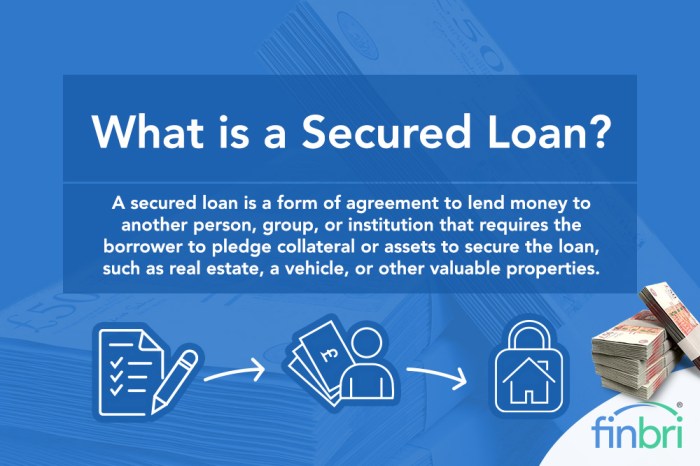
Loan security in finance refers to the collateral or assets that borrowers offer to lenders as a guarantee for the repayment of the loan. This provides a level of assurance to lenders that they can recover their funds in case the borrower defaults on the loan.
Types of Loan Securities
- Real Estate: Properties such as homes, land, or commercial buildings can be used as loan security.
- Automobiles: Vehicles can also serve as collateral for auto loans.
- Investment Portfolios: Stocks, bonds, and other investment holdings can be pledged as security.
Importance of Loan Security
For lenders, loan security minimizes the risk of financial loss by providing an asset they can seize and sell to recover the loan amount. It also allows borrowers to access loans at lower interest rates due to the reduced risk for the lender.
How Loan Security Works
When a borrower offers collateral as loan security, the lender assesses the value of the asset and determines the loan amount based on this value. In the event of default, the lender can take possession of the collateral and liquidate it to recoup the outstanding loan balance.
Types of Loan Securities
When it comes to securing a loan, there are various types of loan securities that borrowers can use to provide lenders with assurance of repayment. Understanding the different types of loan securities can help borrowers make informed decisions when seeking financing.
Collateralized Loans
Collateralized loans are loans that are backed by collateral, which is an asset that the borrower pledges to the lender in case of default. Common examples of collateral include real estate, vehicles, equipment, or valuable possessions. If the borrower fails to repay the loan, the lender has the right to seize and sell the collateral to recover the outstanding debt.
Asset-Backed Securities
Asset-backed securities are financial instruments that are created by pooling together various types of assets, such as loans, mortgages, or receivables, and selling them to investors. These securities are backed by the cash flows generated by the underlying assets, providing investors with a stream of income.
Personal Guarantees
Personal guarantees involve a third party, usually a business owner or individual, who agrees to take responsibility for the loan if the borrower defaults. This type of loan security adds an additional layer of assurance for lenders, as they can pursue the guarantor's assets in case of non-payment.
Secured vs. Unsecured Loans
Secured loans are backed by collateral, while unsecured loans do not require any collateral. Secured loans typically have lower interest rates and longer repayment terms compared to unsecured loans, as they pose less risk to lenders. Unsecured loans, on the other hand, have higher interest rates and stricter eligibility requirements due to the lack of collateral.
Impact on Interest Rates and Loan Terms
The type of loan security used can significantly impact the interest rates and loan terms offered by lenders. Collateralized loans and asset-backed securities are considered less risky by lenders, leading to lower interest rates and more favorable terms. Personal guarantees can also improve loan terms by providing additional security to lenders.
Examples of Assets Used as Loan Security
- Real estate properties
- Vehicles
- Equipment
- Savings accounts or investments
- Valuable possessions
Benefits of Loan Security
Loan security offers various advantages for both lenders and borrowers, making it a crucial aspect of the lending process. Let's explore how having loan security can benefit different parties involved in financial transactions.
Improved Access to Credit and Lower Interest Rates
Having loan security in place provides lenders with a guarantee that their funds will be repaid, reducing the risk associated with lending money. This reduced risk allows lenders to offer loans to a wider range of borrowers, including those with lower credit scores or less established credit histories.
In turn, borrowers who might not qualify for a loan without security can access credit at more favorable terms, such as lower interest rates.
Assistance for Borrowers with Poor Credit History
For individuals with poor credit history, obtaining a loan can be challenging. However, by providing loan security, borrowers can mitigate the lender's concerns about repayment, making them more likely to approve the loan application. This can be particularly helpful for individuals looking to improve their credit score by demonstrating responsible repayment behavior.
Real-Life Scenarios
In real-life scenarios, loan security plays a crucial role in various financial transactions. For example, a small business owner looking to secure a business loan may offer their equipment or inventory as collateral, giving the lender confidence in the loan's repayment.
Similarly, a first-time homebuyer with a limited credit history may use the property being purchased as security for a mortgage, enabling them to secure financing for their home purchase.
Loan Security Requirements
When seeking a loan, it is important to understand the requirements for assets to be used as loan security.
Typical Requirements for Loan Security
- Assets must have a clear title and be owned outright by the borrower.
- The value of the asset should be easily determined and verified.
- Assets should be in good condition and maintain their value over time.
Evaluating the Value of Loan Security
Assessing the value of loan security involves determining the market value of the asset and its potential for depreciation.
It is essential to obtain a professional appraisal to accurately determine the value of the asset.
Role of Credit History and Income
- A strong credit history and stable income can reduce the need for extensive loan security.
- Lenders may require more substantial security if the borrower has a poor credit history or unstable income.
Tips for Borrowers on Loan Security Options
- Choose assets that have a stable value and are easily marketable.
- Be prepared to provide documentation to prove ownership and value of the asset.
- Consider the impact of loan security on the overall cost of the loan.
Closing Notes
In essence, Loan Security Meaning Explained for Beginners in Finance sheds light on the crucial role that collateral, asset-backed securities, and personal guarantees play in securing loans. By grasping these concepts, individuals can make informed decisions that pave the way for a secure financial future.
Question Bank
What are the common types of loan securities?
Common types include collateralized loans, asset-backed securities, and personal guarantees.
How does loan security impact interest rates?
Loan security can lead to lower interest rates as it reduces the lender's risk.
Can loan security help individuals with poor credit history?
Yes, loan security can enable individuals with poor credit history to secure loans.